Ivan Martin is PRSS WRKS CEO and a seasoned PR Consultant
PR Lessons from Malta’s Latest Broadcasting Authority Survey
Facebook is still Malta’s primary news feed. TV still dominates but only during one 30-minute window. And the entire business news ecosystem is missing from the national picture.

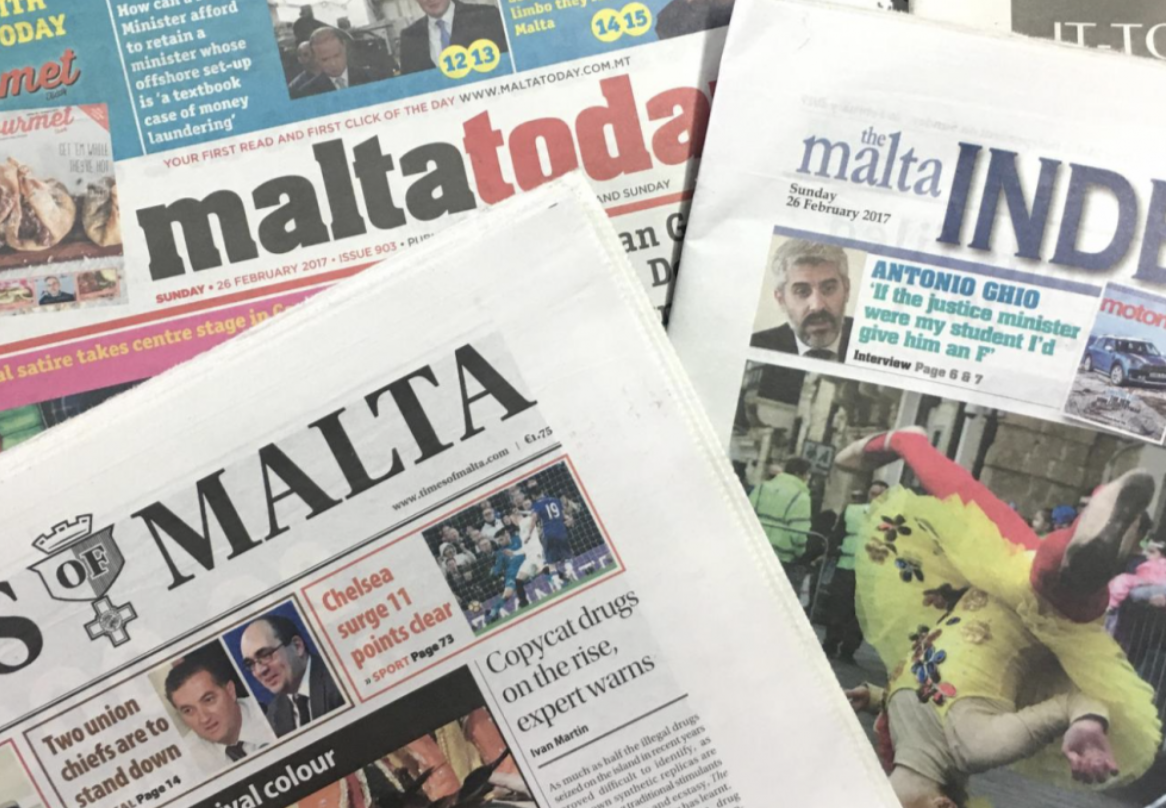
Malta’s latest Broadcasting Authority audience survey, published earlier this week, offers one of the very few public datasets that shed light on how people in Malta consume news. It is not a complete picture, but it does reveal several important patterns that PR and communication leaders should not overlook.
Here’s what you need to know about.
Facebook remains Malta’s primary news feed
Despite widespread global fatigue with Facebook, in Malta it remains the dominant gateway for local news consumption.
89% of online viewers use Facebook to consume Maltese news and current affairs.
This defies the common assumption that Instagram, TikTok, or newer platforms have overtaken it.
PR Lesson:
If a story cannot be summarised, visualised, or adapted for Facebook, it risks never reaching the mainstream.
Facebook shareability must be built into every press release, statement, and media pitch.
TV remains powerful, but influence is concentrated into one 30-minute window
The survey confirms that 87% of residents still watch local TV news. However, this audience is not spread across the schedule.
Viewership is overwhelmingly concentrated in the 8pm–8.30pm bulletin, which remains Malta’s most influential news window far outpacing current affairs and discussion programs.
PR Lesson:
A well-placed story in the 8pm bulletin, or advertising around that moment, can outperform weeks of other activity.
Radio still has significant reach, but with a specific PR function
The data shows that Maltese people still listen to radio, more than most would expect, especially while commuting, working, and running errands.
But radio’s role in Malta is nuanced.
It is rarely where stories break. Instead, it is where narratives are reinforced.
Radio is the medium people absorb passively during their routines.
That makes it one of the most effective channels for repeating and normalising a message after it has already appeared elsewhere.
PR Lesson:
If TV news bulletins and online sites are the headline, and Facebook is the debate,
radio is the echo: the steady, reliable reinforcement that helps a message settle into public consciousness.
For brands, this means radio is less about launching a narrative and more about sustaining one.
Times of Malta continues to dominate digital news consumption
Around 28% of the public prefer online local news sites. Among them, Times of Malta commands 55% preference, confirming its status as Malta’s leading digital news brand.
But the more telling insight is not what the survey measures, it’s what it does not.
The business news ecosystem is entirely missing from the survey
None of Malta’s dedicated business news platforms — MaltaCEOs.mt, WhosWho.mt, BusinessNow.mt — appear in the dataset.
This is a significant omission, especially considering these outlets are where Malta’s leadership class — CEOs, founders, investors, industry regulators, and senior professionals — actually consume their news and shape their perspectives.
The same is true of the business verticals within mainstream outlets, such as Lovin Malta’s MeetInc. or Times of Malta’s Business Picture, as well as industry publications like Be Communications’ Money Magazine.
Ignoring business journalism means ignoring the media ecosystem that shapes corporate reputation.
Why it matters:
Malta’s business media space is under-serviced and under-measured.
In an economy increasingly driven by professional services, entrepreneurship, technology, and capital investment, business journalism deserves the same structural recognition as general news.
Bottom Line: PR influence lives deep inside the newsroom
The BA survey gives useful insight into Malta’s public media habits, but it does not show where business opinion and corporate narratives are formed.
Influence still lives in the conversations happening inside newsrooms: in editorial decisions, in which stories get elevated, in which voices get quoted, and in which narratives are allowed to evolve across platforms.
To shape reputation meaningfully, brands need more than distribution.
They need a seat at the editorial table.
That is where corporate stories are shaped, and where reputations are made or lost.
And that is where credible PR comes in.
Let’s tell your story.